Prerolls
Case Study
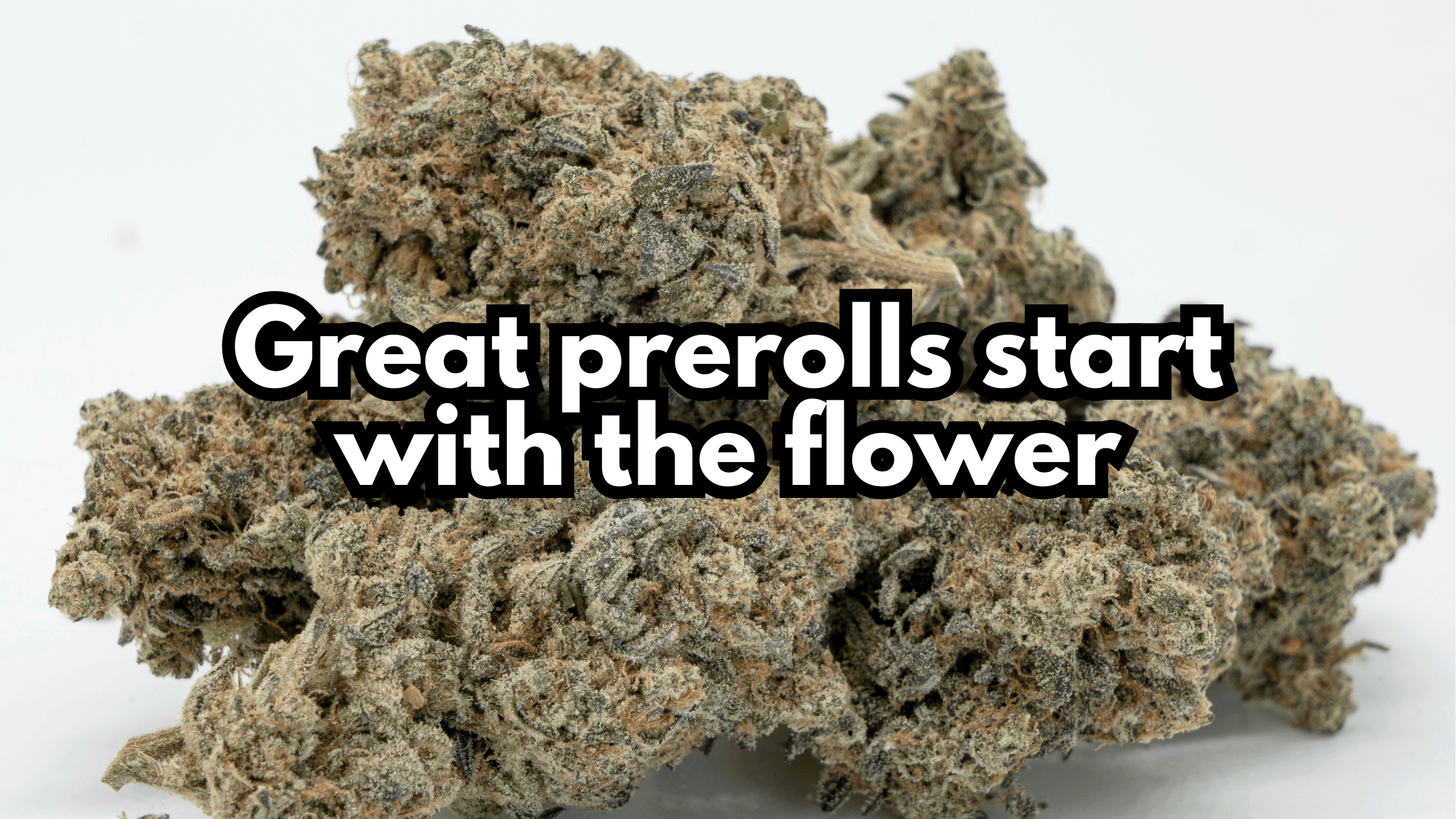
Great prerolls start with the flower
Why moisture, grind quality, and proper storage are the foundation of every great preroll
There is a persistent belief in the preroll industry that production equipment determines product quality. Get the right machine, the thinking goes, and consistent prerolls will follow. The machine matters, but it is not where quality starts. Quality starts before the flower ever touches a cone.
Experienced preroll manufacturers know this well. You can run a perfectly calibrated packing system, follow a tight SOP, and put a well-trained team on the floor, and still produce inconsistent, harsh-burning, short-weight prerolls if the flower going into the machine is wrong. Too moist, too dry, inconsistently ground, or improperly stored, all of these conditions produce problems that no packing system can correct on the back end.
This article covers what those problems look like in practice, what the right specifications are for moisture, grind, and storage, and how to build the environmental controls into your operation that keep your flower production-ready consistently rather than occasionally.
Production specifications at a glance
Parameter | Optimal Range | What Goes Wrong Outside It |
Moisture content | 10% to 12% | Below 9%: dusty, harsh, static. Above 13%: clumping, mold risk, poor burn. |
Water activity | 0.55 to 0.65 aw | Above 0.65: mold and microbial growth. Below 0.55: brittle, terpene loss. |
Grind particle size | 1 to 3 mm (medium) | Under 1 mm: restricted airflow, harsh. Over 6 mm: air pockets, canoeing. |
Storage temperature | 60 to 70°F (15 to 21°C) | Above 77°F: accelerates THC degradation. Below 50°F: brittle paper, condensation risk. |
Storage humidity (RH) | 58% to 62% | Above 65%: mold. Below 50%: flower dries out, terpene and potency loss. |
Production room RH | 55% to 62% | High RH slows drying and promotes mold. Low RH causes static and dusty grind. |
Production room temp | 65 to 72°F (18 to 22°C) | High temps accelerate terpene volatilization. Low temps affect paper handling. |
Moisture content: the variable that affects everything
Moisture is the most important and most frequently mismanaged variable in preroll production. It affects how flower grinds, how it packs, how the finished preroll burns, how it stores, and whether it passes compliance testing in states that set moisture limits. Getting it wrong in either direction creates problems that compound through the entire production process.
The recommended moisture content for preroll manufacturing sits between 10% and 12%, with some manufacturers running as low as 9% for specific machine setups. That range is narrow enough that incoming flower should be measured rather than estimated, and it is variable enough that flower from different sources, different strains, and different storage histories will land in different places even when it looks and feels similar.
Too dry: what happens below 9%
Overly dry flower is more common than most producers expect, particularly in operations that receive flower from third-party cultivators who prioritize shelf stability over production readiness. Flower dried below 9% moisture has lost much of the water that kept its structure intact and its trichomes flexible.
At the grinder, the consequences show up immediately. Dry flower does not break down into a consistent medium-grain particle size. It shatters. The result is a high proportion of fine dust mixed with fragments that are too coarse to pack evenly, a bimodal particle distribution where the worst properties of both fine and coarse grinds appear in the same batch.
That fine dust creates a static charge during grinding that causes flower to cling to machine surfaces, fill equipment, and the inside walls of cones rather than settling where it needs to go. Static-driven clinging is a real production headache that slows throughput and creates uneven fill weights between cones in the same batch. The fine particles also pack more densely than medium-grain flower, restricting airflow in the finished preroll and producing a harsh, tight draw that consumers notice immediately.
Terpene loss is the other consequence of over-dry flower that does not show up in production but absolutely shows up in the consumer experience. Terpenes, the aromatic compounds responsible for a strain's flavor and smell, are volatile. They begin evaporating at accelerated rates once flower moisture drops below 9%. A preroll packed with over-dry flower may have acceptable cannabinoid content on a lab certificate, but it will taste flat and smell weak compared to what the strain should deliver at proper moisture.
Too moist: what happens above 13%
In the packing machine, overly moist flower sticks to pod walls, fill equipment, and machine components rather than flowing freely. This slows throughput, increases the cleaning burden between batches, and makes fill weight targets harder to hit consistently. Operators running moist flower through a centrifuge or vibration-based system will notice the flower behaving sluggishly, not settling the way it should, and producing a less dense pack than the same strain at proper moisture would deliver.
Inside the finished cone, moisture creates a set of problems that progress over time. Wet flower can cause the oils in the cannabis to migrate through the paper walls of the cone, creating a greasy or translucent spot on the outside of the preroll that looks unprofessional on a retail shelf. More seriously, prerolls packed with above-target moisture and then sealed in airtight packaging create conditions where residual moisture has nowhere to go. If that moisture is high enough, mold can develop inside sealed, finished product during distribution and before it reaches the consumer. A mold recall is one of the most damaging events a cannabis brand can experience, and it is almost always traceable to moisture management failures earlier in the production process.
Cannabis flower typically ranges from 6% to 15% moisture content depending on its source and storage history. The production target of 10% to 12% sits in the middle of that range for good reason: it is dry enough to grind and pack cleanly, moist enough to preserve terpenes and burn correctly, and stable enough to resist microbial growth through the distribution chain.
Water activity: the number that matters for microbial safety
Moisture content and water activity are related but different measurements, and the distinction matters for preroll producers. Moisture content tells you how much total water is in the flower. Water activity tells you how much of that water is available for microbial organisms to use.
Water activity is measured on a scale of 0 to 1, and for cannabis flower, the target range is 0.55 to 0.65 aw. Below 0.55, the flower is too dry and terpene degradation accelerates. Above 0.65, there is enough free water available that mold, yeast, and bacteria can establish and grow. A reading above 0.70 represents an active mold risk.
Many compliance testing programs in legal cannabis states now require water activity testing alongside moisture content, and the two numbers do not always move together in predictable ways. A flower sample can have acceptable moisture content by percentage while still having elevated water activity if its cell structure has been damaged during drying in ways that release bound water. Producers sourcing from multiple cultivators should request both measurements rather than relying on moisture content alone.
Practical tip: A calibrated moisture meter is a basic piece of production equipment that costs very little relative to the production problems it prevents. Check every incoming flower batch before it goes into storage, and check again before it goes to the grinder. If a batch is outside range, address it before production rather than discovering the problem mid-run.
The grind: why particle size determines everything downstream
Once flower is at the right moisture, the grind is where production quality either gets protected or starts to fall apart. The grinding step does not just reduce flower to a fillable material. It determines the airflow characteristics of the finished preroll, the burn rate and evenness of the smoke, the ability of the packing machine to produce consistent fill weights, and the structural integrity of the cone through the distribution chain and into the consumer's hands.
None of those outcomes can be corrected after the grind. If the particle size is wrong, everything built on top of it inherits the problem.
What makes a grind wrong: too fine
Over-grinding is the most common grinding error in cannabis preroll production, particularly in operations that started with consumer-grade or food-service equipment before transitioning to purpose-built production grinders. High-RPM blade grinders, modified blenders, and food processors all have the same characteristic flaw: they keep cutting until the material is uniform, and uniform under those conditions means fine.
Particle sizes below 1 millimeter pack too densely. The small particles nestle together with minimal void space between them, producing a fill that looks good visually but restricts airflow severely. A consumer drawing on a preroll packed with fine-ground flower has to work harder to pull air through it. The draw is tight, the smoke runs hotter because airflow is restricted and combustion is less efficient, and the preroll is more likely to go out mid-smoke because insufficient air reaches the cherry to keep combustion going.
Fine particles also have more surface area exposed per unit of weight than larger particles. More surface area means faster cannabinoid and terpene volatilization during storage, and faster, hotter combustion during smoking. Both of those outcomes are bad for the consumer experience. The preroll may look perfectly packed on the outside while delivering a harsh, fast-burning session that erodes trust in the brand.
What makes a grind wrong: too coarse
Coarse grinding creates the opposite airflow problem. Particles above 6 millimeters do not nestle together the way medium-grain material does. They sit against each other with significant void space between them, creating air pockets throughout the fill. Those air pockets are the primary cause of canoeing, the condition where the burn front channels down one side of the joint faster than the other because it finds a path of least resistance through an air pocket rather than burning evenly across the full cross section of the cone.
Coarse particles also cause mechanical problems in the production process. Large, irregular pieces impact the paper walls of cones during filling with more force than fine material does. In thinner paper cones, this causes tears near the tip, where the geometry is tightest. In any cone, it creates density inconsistencies where large particles settle in some spots and leave gaps in others, making fill weight targets harder to achieve batch to batch.
The target: medium and consistent
The goal of the grinding step is a medium particle size in the range of 1 to 3 millimeters with consistent distribution across the batch. At this size, particles pack together with enough contact to provide structural integrity while leaving enough void space for air to move freely through the cone. The draw feels natural, combustion is even across the full burn surface, and the preroll holds its shape without feeling too tight or too loose.
Consistency across the batch matters as much as hitting the right average size. A grind that produces mostly 2-millimeter particles with a significant tail of both fine dust and 8-millimeter chunks behaves worse than a grind that averages slightly coarser but with tighter distribution. The reason is that mixed particle sizes segregate during packing. Finer material settles to the bottom of the cone, coarser material stays at the top, and the resulting density gradient means the cone burns differently from tip to filter. That graduated burn is unpleasant, unpredictable, and a consistent source of consumer complaints
The sifting step is not optional
Sifting after grinding is the quality control step that catches what the grinder missed. A sifting screen removes stems, seeds, oversized particles, and the coarser chunks that did not break down fully during grinding. It also allows excess fine material to separate out if the grinder ran hot or processed an overly dry batch.
In practice, sifting adds a few minutes to the preparation workflow per batch and is often skipped under production pressure. The cost of skipping it shows up consistently in elevated cone tear rates, weight variance between units, and increased canoeing complaints in finished product. A rotary sifter or a simple vibratory screening table is inexpensive relative to the production problems it prevents, and it makes the packing machine's job significantly easier by presenting a more uniform input material.
The grind is the foundational quality decision in preroll production. No packing system, regardless of how precisely engineered, can correct an inconsistent grind on the back end. Getting particle size right and consistent before the flower reaches the machine is the single most impactful preparation step a producer can take.
Equipment matters: why purpose-built grinders outperform everything else
A production grinder designed for cannabis operates at low RPM with high torque. It tears flower apart rather than cutting or pulverizing it, which preserves more of the plant's cellular structure and produces a more natural-feeling particle than a blade-cut grind does. Low operating temperatures are important too. High-RPM grinders generate heat through friction, and heat volatilizes terpenes during the grinding process itself. A low-temperature, low-RPM grind preserves more of the aromatic compounds that give the strain its character.
Purpose-built cannabis production grinders also allow for screen size adjustment, which gives operators control over the coarseness of the output. Denser, stickier strains may need a slightly coarser screen setting than lighter, drier material. Being able to adjust that setting and then measure the output to verify it is in range is a basic production capability that consumer-grade equipment does not provide.
Flower storage: how to protect your input material from the moment it arrives
Flower that arrives at your facility in good condition can deteriorate rapidly if it is stored improperly. Cannabis flower is a hygroscopic material, meaning it actively exchanges moisture with the surrounding air. Leave it in an environment that is too humid and it absorbs moisture, moving toward the mold risk range. Leave it in an environment that is too dry and it loses moisture, moving toward the over-dry grinding problem. The storage environment is not passive. It actively affects the material.
Temperature: the range and why it matters
The optimal storage temperature for cannabis flower intended for preroll production is between 60 and 70 degrees Fahrenheit, roughly 15 to 21 degrees Celsius. Within this range, the biological and chemical processes that degrade cannabinoids and terpenes proceed slowly enough that properly stored flower retains its potency and aromatic profile for months.
Above 77 degrees Fahrenheit, THC degradation accelerates measurably. The compound begins converting to CBN, a process that is essentially irreversible. Terpenes also evaporate faster at elevated temperatures because they are volatile compounds with relatively low boiling points. A storage room that runs warm in summer can meaningfully affect the potency and flavor profile of flower inventory in a few weeks, which shows up in lab testing and in consumer experience.
Below 50 degrees Fahrenheit, a different problem emerges. Cold storage causes the oils in the flower to thicken, trichomes become fragile and prone to breaking off during handling, and the rolling papers and cone papers used in production become brittle and less flexible. Moving flower from cold storage into a warmer production environment also creates condensation risk as moisture in the air deposits on the colder flower surface. That condensation is unevenly distributed, creating moisture hot spots that cause localized mold risk even in flower that was at acceptable overall moisture levels before cold storage.
Humidity: the 58 to 62 percent target
Relative humidity in the storage environment should be maintained between 58% and 62% for flower intended for preroll production. This range keeps flower flexible without becoming damp, preserves terpenes without accelerating their evaporation, and sits safely below the 65% level where mold risk begins to rise.
Below 50% RH, flower begins losing moisture to the surrounding air. At 40% RH, which is the average comfortable relative humidity in a typical air-conditioned space, cannabis flower stored in open containers will noticeably dry out within days. Below that level, the process accelerates. A standard office environment or warehouse without humidity control is not suitable for cannabis flower storage, even short-term.
Above 65% RH, the risk calculation changes direction. Mold and mildew thrive in high-humidity environments. Cannabis flower with a water activity above 0.65 in a high-humidity storage room is at meaningful microbial risk, and mold spores that establish during storage do not simply disappear when the flower is moved to the production floor. They are still there, sealed inside the finished preroll, which is a compliance and consumer safety issue that no amount of production quality can fix.
Humidity control packs from suppliers like Boveda and Integra Boost are a practical and inexpensive way to regulate humidity inside sealed storage containers. A 62% two-way humidity pack inside a sealed glass jar or Mylar bag maintains the target range by releasing or absorbing moisture as needed. For larger bulk storage, climate-controlled rooms with dedicated dehumidifiers or humidifiers and continuous RH monitoring through hygrometers are the appropriate solution.
Light: the underestimated degradation factor
Ultraviolet light degrades THC through a process called photodegradation. UV exposure breaks down cannabinoid compounds at a measurable rate, and the degradation is directional and irreversible. A storage room with direct sunlight exposure, or with uncovered fluorescent lighting directly above open flower storage, is actively reducing the potency of the inventory on the shelves.
The solution is straightforward: store flower in opaque containers in areas without direct light exposure. Sealed Mylar bags, dark glass jars, and sealed cardboard boxes all work. Transparent packaging left under direct lighting does not. Even the short-term storage of flower on an open production table under overhead lighting during a production shift involves some UV exposure, though the duration is typically short enough not to be significant.
Air exposure: oxygen and terpene loss
Oxygen exposure accelerates the oxidation of cannabinoids and the evaporation of terpenes. Flower stored in loosely sealed or unsealed containers in a ventilated space will lose aromatic profile and, over a longer period, potency. For production-scale storage, bulk flower should be kept in sealed containers that limit air exchange. Opening and resealing containers rather than leaving them open during production, and limiting the volume of flower broken out for immediate use, reduces the cumulative exposure over a production day.
The production room environment: controlling what surrounds your process
Storage conditions protect flower before it gets to the production floor. The production room environment affects flower during the grinding and packing process itself, and the conditions in that room can undo proper storage if they are not managed.
Temperature in the production room
A production room running at 65 to 72 degrees Fahrenheit is within the working range that keeps flower, papers, and equipment performing well. Above 75 degrees, terpene evaporation accelerates during the grinding and packing process. Warm rooms also make sticky, resinous strains more difficult to work with, increasing the adherence of material to machine surfaces and slowing throughput. Rolling papers and cone papers are slightly more pliable in warm conditions, which can cause them to conform differently in packing equipment than they do at cooler temperatures.
Below 60 degrees Fahrenheit, papers become stiffer, which makes them more prone to cracking or tearing during filling. Cold production environments also affect the behavior of cannabis extracts in infused preroll workflows, since concentrates thicken at lower temperatures and do not distribute through the flower as evenly.
Relative humidity in the production room
The production room should be maintained at 55% to 62% relative humidity. This keeps flower in the target moisture range while it sits on the production table between the grinder and the packing machine, prevents excessive static buildup during grinding, and keeps cone papers flexible enough to fill without splitting.
High production room humidity is a common problem in facilities that do not have dedicated climate control. In warm, humid climates or during summer months, a production room without active humidity management can run well above 65% RH, which means flower that arrived at 11% moisture is actively absorbing ambient moisture during the production process. By the third hour of a production shift in a 70% RH room, flower that started at the right moisture level may be running significantly wetter than it was at the start of the day.
Low production room humidity creates the opposite problem and is more common in facilities using aggressive air conditioning or in dry climates. A room running below 50% RH actively desiccates flower sitting on the production table. Flower that tested at 11% moisture in storage can drop below 9% in a few hours of exposure to a very dry production environment. The static problems associated with dry flower, including adherence to surfaces and inconsistent fill weights, appear as the shift progresses even though the incoming flower was acceptable.
Invest in a hygrometer for both your storage area and your production floor. They cost very little and tell you exactly what is happening to your flower environment in real time. Discovering a humidity problem mid-production, after the batch is already packed and sealed, is significantly more expensive than catching it before the shift starts.
Airflow and contamination control
Production room airflow is a balance between providing enough ventilation to prevent moisture and terpene buildup from filling the room, and not so much airflow that flower on the production table is actively losing moisture to ventilation-driven evaporation. HEPA filtration is standard in compliant cannabis manufacturing facilities and helps manage airborne particulates, including the fine cannabis dust that grinding generates. That dust is a respiratory concern for production staff over extended shifts and should be exhausted properly rather than allowed to recirculate.
Temperature and humidity sensors in the production room, integrated with the facility's HVAC and humidity control systems, allow operators to monitor conditions in real time and make adjustments before conditions drift outside the acceptable range. In facilities running multiple production shifts, logging these conditions with timestamps allows any quality issue that emerges in a specific batch to be traced to environmental conditions that were present during that batch's production. That traceability is good manufacturing practice regardless of whether it is currently required by your state's regulatory framework.
The preroll starts before the cone
A premium preroll begins with premium flower preparation. The machine, the cone, the SOP, and the team all matter. But they are all downstream of the flower that feeds them.
Producers who understand this build their operations around flower preparation as a core function, not a precursor to the real work. They check moisture before every production run. They measure grind output and sift between the grinder and the packing machine. They store flower in climate-controlled environments with real humidity management rather than hoping the warehouse conditions are close enough. They monitor their production room temperature and humidity through every shift.
These are not complicated requirements. They are disciplined ones. And the brands that maintain that discipline consistently are the ones whose prerolls burn correctly every time, whose fill weights hold batch to batch, and whose dispensary accounts reorder without hesitation because they know what they are getting.
The best packing machine in the world cannot compensate for flower that was not properly prepared. But properly prepared flower makes every machine run better, every operator's job easier, and every finished preroll a more consistent representation of your brand.
Preroll Systems
Best Preroll Machine
Best Gummy Machine
Preroll Centrifuge
Best Preroll Centrifuge Machine
How to Make Prerolls
KungTech GPC
KungTech
Hummingbird
Hummingbird PR-1
Hummingbird Centrifuge
Preroll Pods
Preroller
Preroll-er
Hummingbird vs KungTech
Gravity Packing Centrifuge
Best Preroll Machine
Versatile Preroll Machine
Density Control Prerolls
Preroll Flip Test
Preroll Upside Down Test
Durable Preroll Machine
Scalable Preroll Machine
Preroll Packing Centrifuge
SaintyCo
Sorting Robotics