Prerolls
Case Study
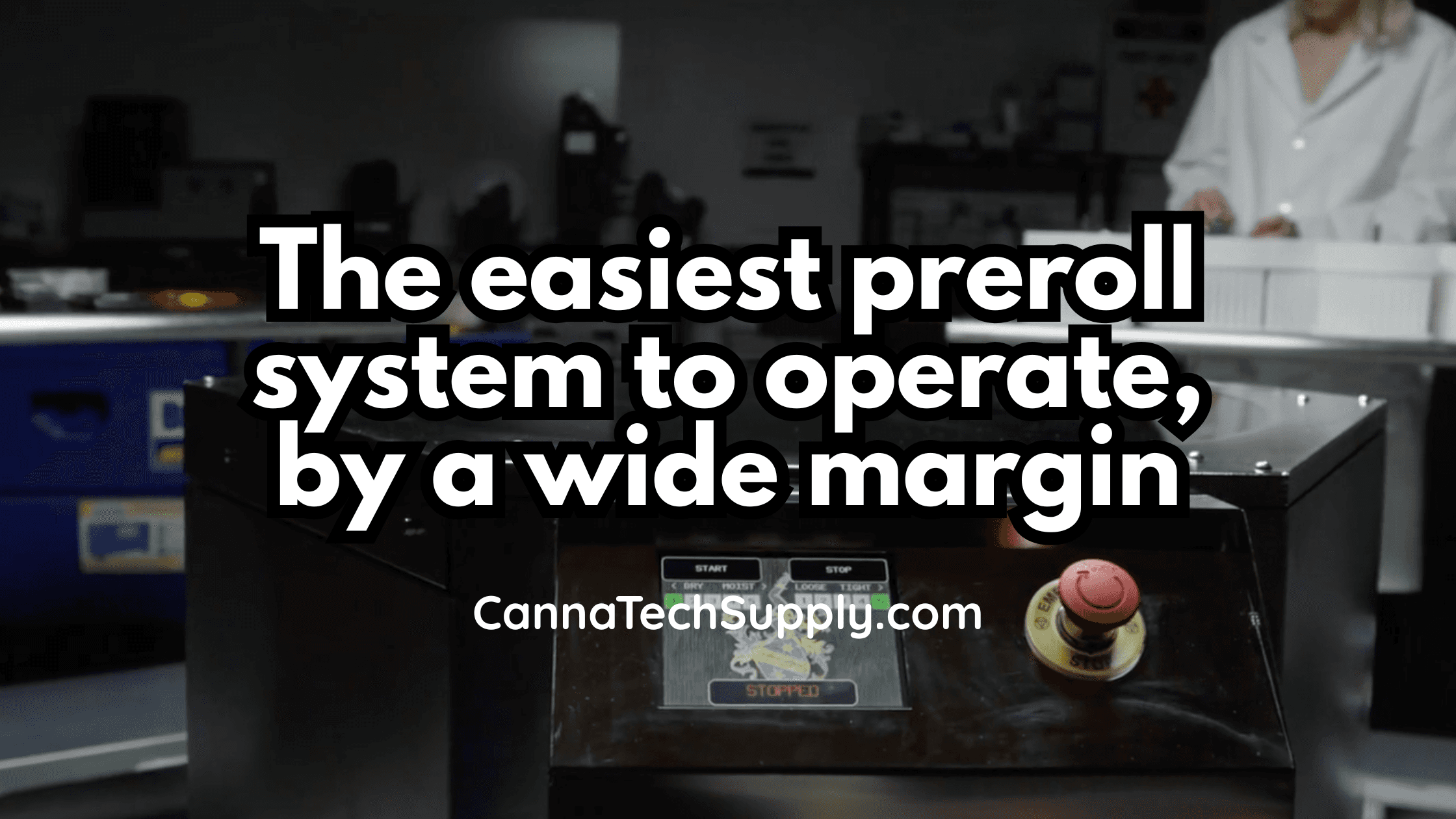
The easiest preroll system to operate, by a wide margin
In this article, we will explain why the KungTech GPC Preroll Centrifuge System simply is the easiest, most consistent, and most reliable preroll packing system in the world by a massive margin.
Ask any experienced preroll operator what the biggest headaches in their production process are, and you will hear the same answers: inconsistent packs, slow throughput, constant machine maintenance, and the reality that most preroll equipment is just hard to work with. Either it takes a full crew to run, or it requires constant adjustments, or the cleanup alone burns an hour out of every shift.
The KungTech GPC Preroll Centrifuge was built to solve all of those problems at once. It is not just a fast machine. It is genuinely the easiest preroll packing system to operate, maintain, and scale, for operations of any size. That ease of use is not a marketing line. It is the single most consistent piece of feedback that comes from the preroll businesses that have been running the GPC for years.
This article covers exactly why the GPC stands apart from every other preroll system on the market, starting with the science behind centrifuge packing, and then getting into the specific features that make this machine a legitimate long-term investment for any cannabis brand serious about preroll production.
396 | Cones packed per spin cycle |
60 sec | Time per cycle (approx. one pound of cannabis) |
50,000+ | Prerolls producible per day with a single machine |
10 x 10 ft | Recommended production footprint |
10+ years | Proven operational lifespan without replacement |
1 | Operators needed to run the full system |
Why centrifuge packing is the most effective method, scientifically
There are three main methods used in preroll packing machines: vibration, rolling, and centrifuge. Most machines on the market use vibration. The GPC uses centrifuge. The difference is not just a design choice. It is a fundamental difference in what physics allows each method to accomplish.
Vibration-based machines pack cannabis by shaking the material downward repeatedly. The problem with vibration is that it creates an inconsistent distribution of force across the cone. Different areas of the cone experience different levels of compaction depending on their position relative to the vibration source. The result is uneven density, air pockets that form in the middle or near the crutch, and a finished preroll that may look acceptable on the outside but burns unevenly.
A centrifuge operates differently. When the GPC spins, it applies centrifugal force outward and downward across every cone simultaneously and uniformly. The force reaches all the way to the crutch, which is the hardest area to pack consistently with any other method. Because the force is applied evenly across the full length of the cone, air pockets are eliminated, density is consistent from tip to crutch, and every preroll in the batch receives the same pack.
Only a centrifuge can eliminate air pockets and achieve a consistent pack all the way to the crutch. No vibration machine can do this, because the physics of vibration does not allow uniform force distribution across the full length of a cone.
The GPC goes further by adding density control, which is a feature no other preroll machine in the world offers. By adjusting the speed and time settings of the spin cycle directly from the HMI touch screen, operators can tune the exact density of every pack. Different strains have different densities, different moisture levels, and different grind characteristics. A machine with fixed packing force has to find a compromise setting that works acceptably for everything. The GPC lets operators dial in the perfect setting for each strain, which means every preroll is packed perfectly regardless of what you are running that day.
The "flip test" is the clearest demonstration of how well this works. A properly packed GPC preroll can be turned upside down and will hold its pack without the cannabis falling out or shifting. That is not possible with vibration-packed prerolls at the same speed and volume. It is a simple test that shows how different the end result is when the packing method is fundamentally better.
The easiest preroll system to operate, by a wide margin
This deserves its own section because it is genuinely the most important practical advantage of the GPC for the businesses that use it day to day.
Most preroll equipment asks a lot from the people running it. Setup is complicated. The workflow requires multiple people working in coordination. Adjustments mid-production are difficult. Cleaning at the end of a shift takes significant time. Training a new operator takes days or weeks before they can run the machine without supervision.
The GPC is different in every one of those respects.
One person can run the entire system
If you want to increase throughput, adding operators is straightforward. While one person runs the machine and manages spin cycles, a second can be prepping pods, and a third can be handling cone extraction. With that three-person configuration, the GPC can run near-continuously with minimal downtime between cycles. But the system is never dependent on having multiple people available. A single skilled operator can run a complete production shift without issue.
The patented weight template system eliminates the hardest part of the job
One of the most time-consuming parts of any preroll operation is weight management. Every finished preroll needs to meet your target weight, which traditionally means pre-weighing flower before filling, then spot-checking finished prerolls after packing, and adjusting constantly.
The GPC's patented weight template system eliminates most of this. The system uses a customizable layer template that serves as a "cookie cutter" measuring tool. Operators fill the template to the correct level for their target weight, and every pod in the batch gets the same amount of cannabis. Once you have calibrated your template for a given strain and weight, you do not need to weigh every finished preroll. The system consistently produces prerolls within spec without constant measurement.
This is not a minor convenience. It changes the production economics of the entire operation. Time that previously went into weighing, measuring, and correcting goes back into output. It also reduces operator error, because the process is straightforward enough that a new team member can learn it and produce accurate results quickly.
The patented weight template system is one of the most practical innovations in preroll manufacturing. It removes the most error-prone and time-consuming step from the packing process, making the GPC genuinely the most operator-friendly system available.
Training is fast
Most operators can learn the core GPC workflow in a single session. The controls are intuitive. The HMI touch screen is clearly labeled. The pod attachment process is simple and consistent. There is no complicated calibration routine to run at the start of each shift. You arrive, set your template, attach your pods, and produce.
For businesses that deal with employee turnover or seasonal staffing changes, this matters a lot. A machine that requires weeks of training to operate proficiently is a liability every time someone new joins the team. The GPC is not that machine.
Quiet operation that does not disrupt the work environment
This might sound like a small thing, but ask anyone who has worked in a facility with loud vibration-based preroll equipment for eight hours and they will tell you it is not. The GPC operates quietly. The centrifuge spin is smooth and the noise level is low enough that normal conversation and communication can happen in the production area without issue.
This also makes the GPC appropriate for production environments that are co-located with other business functions, including offices, processing areas, or retail operations that share a building. You do not need to isolate the machine in a separate room to protect the rest of your team from the noise.
Speed and output that can anchor a full preroll business
Speed and output that can anchor a full preroll business
The GPC packs up to 396 cones in a single 60-second spin cycle. That translates to roughly one pound of cannabis packed per minute of run time. Run the machine consistently across a production day, and a single unit can produce 50,000 prerolls or more.
That is not a maximum capacity claimed under ideal lab conditions. Those are the output numbers that actual preroll businesses are achieving with one GPC in a regular production environment.
For a brand producing 50,000 prerolls per month, the GPC provides the full production capacity needed without requiring additional equipment or a large production team. For a brand producing 50,000 prerolls per day, you add units and operators, and the system scales proportionally. The machine works the same way whether you have one running or ten.
The speed is also useful not just for volume but for flexibility. Because a full cycle runs in about 60 seconds, operators can switch between strains, test a new weight template, or adjust density settings between cycles without losing significant production time. That responsiveness is hard to achieve with larger, slower systems that take significant time to reconfigure between runs.
Multiple strains, zero cross-contamination
For preroll brands running more than one SKU, cross-contamination between strains is a real concern. If your equipment is not designed to handle strain changes cleanly, you either accept some level of mixing between batches, or you spend significant time on cleaning between every strain change.
The GPC's pod-based design handles this directly. Each pod set is dedicated to a single strain during a production run. Pods can be prepped and loaded separately for different strains, allowing operators to run multiple strains within a single production session without any mixing between them. The individual pod architecture physically separates the strains throughout the entire packing process.
This also means you can run different strains on the same machine in the same day without a full teardown between each one. Combined with the GPC's ease of cleaning, strain changeovers are straightforward rather than disruptive.
A compact machine that fits real-world production spaces
The GPC requires a recommended footprint of roughly 10 by 10 feet for a standard single-operator setup. The machine itself measures approximately 3 feet by 3 feet and weighs around 270 pounds, meaning it can be moved with a small team and repositioned as your facility layout evolves.
This matters for a few different types of operations. A startup brand working out of a licensed facility with limited square footage does not need to dedicate a large production room to the GPC. An established operation adding capacity does not need to redesign its floor plan. A co-packing business running multiple products can fit the GPC into a shared production space alongside other equipment.
If you are scaling up with multiple operators, you will need more space for the additional tables and workflow, but the machine itself remains the same size. The footprint of your operation grows with your team, not with your equipment.
Ten-plus years of proven reliability, and no one is replacing them
There is a specific claim worth looking at closely here, because it is unusual in the cannabis equipment market: preroll businesses have been running the same GPC machines for over seven years without having to replace or upgrade the unit.
TEn years is a long time in any equipment category. In cannabis, where the industry itself is less than a decade old in most markets, that kind of operational longevity is notable. It means the GPC was engineered for durability from the start, not just optimized for initial performance.
Most cannabis production equipment comes with a one-year warranty and an expectation that you will be looking at upgrades or replacements within a few years as components wear out or production demands grow. The GPC operates on a different timeline. The machines in service today are the same machines that went in years ago. They are still producing prerolls to the same standard. They are not being replaced because there is no need to replace them.
For a preroll business calculating the total cost of ownership of production equipment, this changes the math significantly. A machine with a longer useful life spreads its acquisition cost over more production cycles, lowers the overall cost per unit, and removes the disruption and downtime cost of replacing equipment every few years.
Preroll businesses have been running the same GPC machines for over seven years without replacement. That kind of operational longevity is rare in cannabis manufacturing equipment and reflects how well the machine was engineered.
The easiest preroll machine to clean and maintain
End-of-shift cleanup is one of the most underestimated costs in a preroll operation. A machine that is difficult to clean does not just eat time. It accumulates residue that affects product quality over time, creates cross-contamination risk between runs, and causes operators to cut corners when they are tired at the end of a long day.
The GPC was designed with cleanup as a production function, not an afterthought. The pod-based system keeps cannabis contained in individual pods throughout the packing process, which dramatically limits the surface area that requires cleaning after each run. The machine's components that come into contact with cannabis are accessible and straightforward to clean without disassembly.
The limited-friction design of the Magnum hub also means fewer mechanical parts accumulating cannabis residue over time. Fewer contact surfaces mean faster cleaning and lower maintenance overhead across the life of the machine.
For operations running multiple shifts or switching between strains frequently, this is a meaningful operational advantage. The time savings add up quickly when cleaning between runs takes 10 minutes instead of 45.
The ROI case: a machine that pays for itself
Equipment purchasing decisions in cannabis come down to a simple question: what is the return on this investment, and how fast does it arrive? For the GPC, both answers are favorable.
At 50,000 prerolls per month from a single machine, the output volume supports a production-level business from day one. Labor costs are kept low because one operator can run the system without assistance. Waste is minimized because the weight template system produces consistent fills with minimal over-pack or under-pack. Downtime is low because the machine is reliable and fast to clean between runs.
The combination of those factors means the GPC can reach payback within a single month of high-volume production for operations that are running it consistently. That is not a theoretical projection based on perfect conditions. It is the experience of preroll businesses that have put the machine to work at scale.
Beyond the initial payback period, the long operational lifespan of the GPC means the economics keep improving over time. You are not depreciating toward an early replacement. The machine that paid itself off in month one is still producing prerolls in year seven at the same quality level.
Built for every stage of a preroll business
One of the more useful things about the GPC is that it does not require you to be a large operation to use it effectively. The machine scales with your business rather than forcing you to grow into it.
A startup brand producing a few thousand prerolls per month can run a single GPC with one operator and have plenty of capacity. As volume grows, the same machine handles more output, and if demand eventually outpaces a single unit, adding a second GPC is straightforward because the workflow is identical. You do not need to learn a new system or retrain your team.
For established operations, the GPC integrates into existing production workflows without requiring major changes. The compact footprint, quiet operation, and simple process make it compatible with a wide range of facility types and production configurations.
Co-packing businesses, which need to switch between client brands, strains, and formats regularly, are among the strongest advocates for the GPC precisely because its multi-strain capability, quick strain changeovers, and easy cleaning make high-mix production manageable rather than chaotic.
The KungTech GPC Preroll Centrifuge is the best preroll packing system available because it gets the fundamental things right: the science of packing, the practicality of daily operation, the economics of production, and the durability that turns a capital purchase into a long-term asset.
Centrifuge packing delivers a level of consistency and quality that vibration-based systems cannot match. Density control, air pocket elimination, and consistent pack all the way to the crutch are not incremental improvements over the competition. They are structural advantages that show up in every single preroll you produce.
The ease of operation is real and it matters. A system that one person can run, that trains quickly, that changes strains without cross-contamination, that cleans fast, and that uses a patented weight template to remove the hardest part of the packing process: that is a machine built for the real world of cannabis production, not for a trade show demo.
Ten-plus years of operational longevity across the preroll businesses running these machines is the clearest possible endorsement. The people using the GPC are not replacing it because they do not need to. That says more about the machine than any specification sheet.
If you are building a preroll operation or looking to upgrade what you have, the GPC is the machine to start with and the machine you will still be running years from now.
Preroll Systems
Best Preroll Machine
Best Gummy Machine
Preroll Centrifuge
Best Preroll Centrifuge Machine
How to Make Prerolls
KungTech GPC
KungTech
Hummingbird
Hummingbird PR-1
Hummingbird Centrifuge
Preroll Pods
Preroller
Preroll-er
Hummingbird vs KungTech
Gravity Packing Centrifuge
Best Preroll Machine
Versatile Preroll Machine
Density Control Prerolls
Preroll Flip Test
Preroll Upside Down Test
Durable Preroll Machine
Scalable Preroll Machine
Preroll Packing Centrifuge
SaintyCo
Sorting Robotics